
Can AI Help Create Better Cleaning Schedules for Homes and Offices?
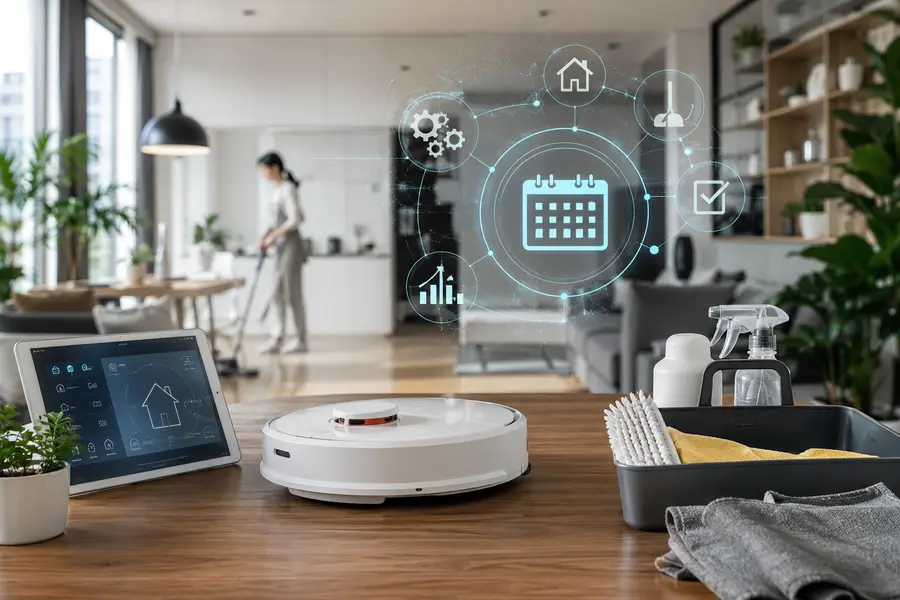
Cleaning Schedules: How AI Improves Home & Office Care
Are dust bunnies making your home or office uncomfortable? Or maybe you’ve got some errands to run to finish off at home that you don’t really think about until that layer of dust and grime not only looks gross but also makes you realize it’s actually a health hazard that you have to deal with? Chores accumulate on most days at a rate that nobody can keep pace with.
There’s no way to stay ahead without some sort of system. Machines now sort which jobs matter most each day. A smart plan adjusts itself depending on how spaces are actually used. Digital logs feed real habits into the process. Over time, patterns shape smarter routines that fit life better. Efficiency comes from learning, not guessing. Whether it’s a family home or a busy office that you have to take care of, AI-enabled cleaning devices are helping make it simpler to have cleaner spaces with less effort.
Why Cleaning Schedules Matter
Cleaning is typically simpler when performing regular cleaning rather than when laziness and chaos have already piled up. Without a system, things that need doing can easily be forgotten – as can dust, unpleasant smells, or even unhealthy air. Uneven cleaning in offices can expose employees to unhealthy living conditions as well as give a bad first impression to clients and customers. One of the benefits of having a proper cleaning schedule is that it will remind you to complete your daily, weekly, and monthly cleaning tasks. That’s the rub: keeping that schedule when life happens. An AI cleaning schedule can really make a difference in helping people to better manage their time as well as their energy when cleaning, especially since the cleaning needs and patterns of use of a home or an office tend to constantly change and evolve.
Common Cleaning Challenges
| Challenge | Impact |
| Missed tasks | Dirt and clutter accumulate |
| Poor time management | Cleaning takes longer |
| Inconsistent routines | Reduced hygiene standards |
| Lack of accountability | Tasks are forgotten |
| Manual scheduling | Increased administration |
Understanding AI Cleaning Technology
Smart applications utilize automated systems and data-based reasoning to provide recommendations related to decision-making. One example of an automated cleaning solution is an AI system used to manage cleaning operations that can analyze various types of information, such as room occupancy, scheduled cleaning times, actual cleaning completion rates, and potentially even usage via sensors. Instead of basing its recommendations on a fixed timetable with no consideration for conditions, AI recommendations are adapted to real needs. A kitchen located in an office where employees are cooking their lunch will typically require a much greater degree of cleaning than a meeting room, which is very rarely used. Most families with children or animals tend to wipe down surfaces more regularly.
Benefits Of AI-Powered Scheduling
One of the biggest benefits of an AI cleaning schedule is that it can increase efficiency without increasing the work. AI reduces task omissions by sending reminders and rescheduling when priorities shift. Homeowners may quit planning chores and start doing chores. Companies also reap the benefit of having cleaning personnel focus on areas that need attention rather than following rigid routines that may not reflect prevailing conditions. Other benefits include more consistent standards of cleanliness, less administration, and higher hygiene standards. Over time, AI-driven scheduling produces cleaner spaces and less stress from the pressures of keeping up regular cleaning duties.
Benefits Of An AI Cleaning Schedule
| Benefit | Home | Office |
| Saves time | ✓ | ✓ |
| Improves consistency | ✓ | ✓ |
| Reduces missed tasks | ✓ | ✓ |
| Supports hygiene standards | ✓ | ✓ |
| Tracks task completion | ✓ | ✓ |
| Improves efficiency | ✓ | ✓ |
How AI Creates Cleaning Plans
Creating a cleaning schedule is more than just about figuring out what you’re cleaning and on what day. AI gathers information about different areas of a home and analyzes how often those rooms are used. Then, based on activity level, past cleaning records, and environmental conditions, it suggests cleaning intervals. It can make adjustments to the schedule automatically if the use pattern changes. For instance, if an office is hit with a flood of visitors in a certain season, AI might decide to clean reception and common-area spaces more frequently. That flexibility also allows cleaning to be concentrated on those areas that are most in need of attention, without wasting labour in other areas.
Digital Cleaning Checklists Explained
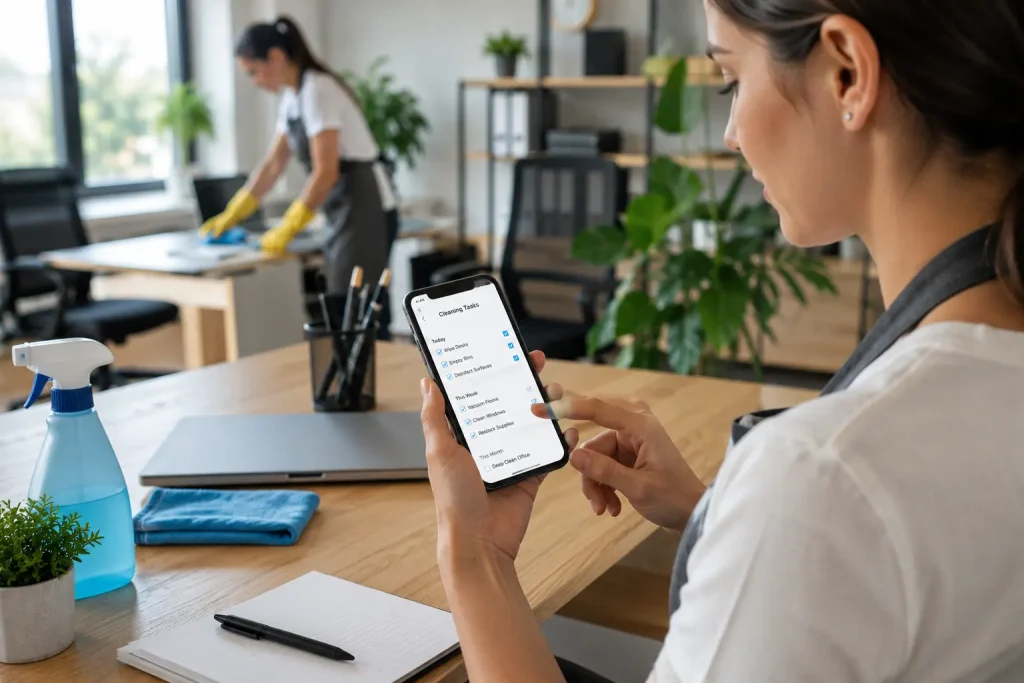
Digital checklists work well in tandem with AI scheduling, which simplifies follow-up and tracking of cleaning tasks and progress. Digital checklists basically change the traditional paper-based ones by bringing the possibility of being used on smartphones, tablets, or computers at any time. When cleaning time approaches, reminders are dispatched to users, and they can even tick off the tasks completed while being on the move. Office managers think that such openness assists them in understanding the quality of cleaning and whether it meets the set standards. A digital cleaning checklist may even be used by families to more effectively delegate chores and distribute household responsibilities. The result: a little more organization, a little more accountability, and fewer missed cleaning jobs.
Practical Uses For Homes And Offices
Home or office, each space gets its own AI-driven cleaning plan. When it comes to households, machines may handle everyday jobs – vacuuming floors, wiping down bathrooms, managing kitchen messes. Seasonal chores could also fall into their hands, slipping neatly into the rhythm of deeper cleans now and then. Also, automatically assigning and monitoring chores being done can take some of the pain out of the family. Artificial Intelligence in offices is used to observe patrolling in high-traffic areas, to control cleaning materials, and to ensure adherence to workplace hygiene standards. These systems can also help professional cleaners focus on areas that require the most attention and improve overall efficiency. Those who own businesses and homes in Australia are the primary beneficiaries of AI-based scheduling in cleaning since the cleaning requirements are always changing due to the varying levels of occupancy and also changing seasons.
Tips For Better Cleaning Results
Planning can be handled to a large extent by AI, but the best outputs still come from a thoughtful application. Make a list of all your cleaning jobs and identify which you do most frequently. With better data, the platform can give the system more useful recommendations. Also, schedules should be reviewed from time to time and revised as and when needed. The benefits of using a digital cleaning list was you never miss a task, and you always have a record of having done the task. Mobile availability provides the convenience of recording progress anytime and anywhere. With AI-guided tips and human monitoring, this approach covers you for both immediate and long-term cleaning success.
The Future Of Smart Cleaning
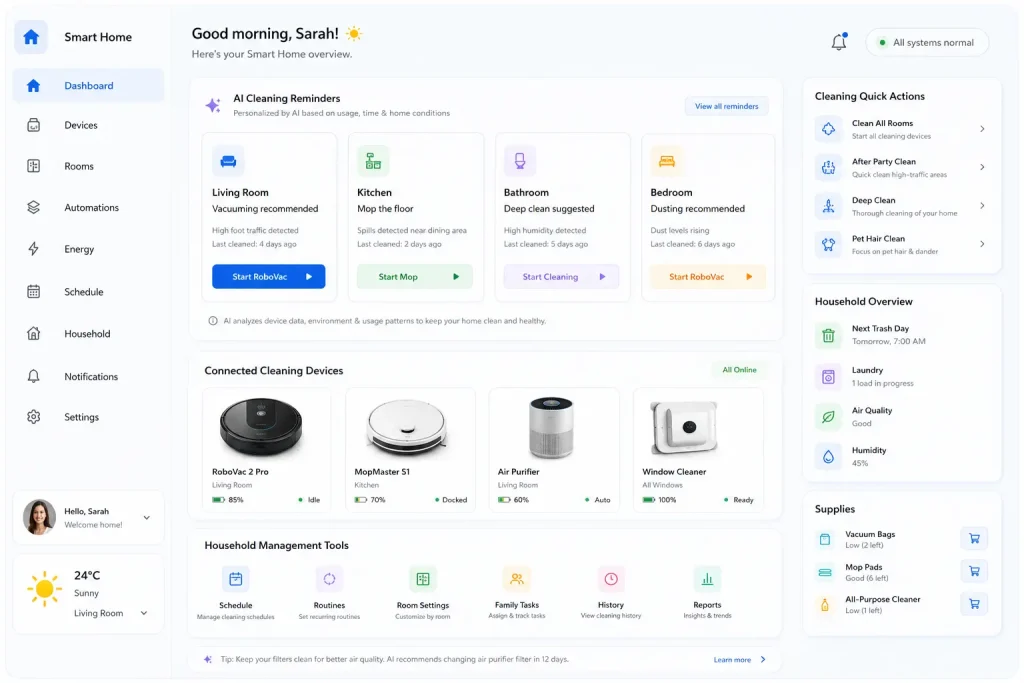
Cleaning systems will inevitably be shaped by the development of AI technology, and clean robots in the future will definitely be smarter than today. Smart sensors, occupancy tools, and building connectivity are currently affecting schedule generation for cleaning. If anything, AI could even find out that a room needs cleaning and reschedule it on its own. Houses might get nudges and warnings from the system about seasonal changes like dust, pollen, or humidity. Besides, live occupancy stats might help buildings decide the best way to send out their clean-up workers. These advancements would make it easy to be energy efficient and to have healthier indoor environments with minimal or no effort.
Summary
Artificial intelligence is changing the way cleaning schedules are developed and executed. AI-based cleaning schedule can be a great help in organising a person’s duties, lessening the chances of forgetting the chores, and also leading to a better level of cleaning consistency not only in the homes but also in the offices. Alongside a digital cleaning checklist, AI improves by making the cleaning process not only more visible and accountable but also more efficient, and this leads to easier and more manageable cleaning routines.
Residential owners and commercial entities in Australia will get the opportunity to use more intelligent scheduling, which will change as per the alterations in the needs and usage of the property. Well, AI won’t be able to clean windows, but it can facilitate the planning and tracking part of the process, thus enabling people to clean with a lesser amount of stress and effort, resulting in cleaner and healthier spaces. while also helping homeowners stay on top of recurring cleaning concerns such as why mold keeps coming back after cleaning homes?
Related Posts

Proven Methods for Removing Pet Odours and Stains
Pet Odour and Stain Removal: Proven Home Cleaning Methods Have you ever entered your house…
How to Get Paint Out of Carpet?
Too much paint on your carpet and think you can never get it out? Breathe…

Tips and Tricks for House Cleaning with Magic Erasers
Have you ever wondered why you have a stubborn stain on your wall or in…